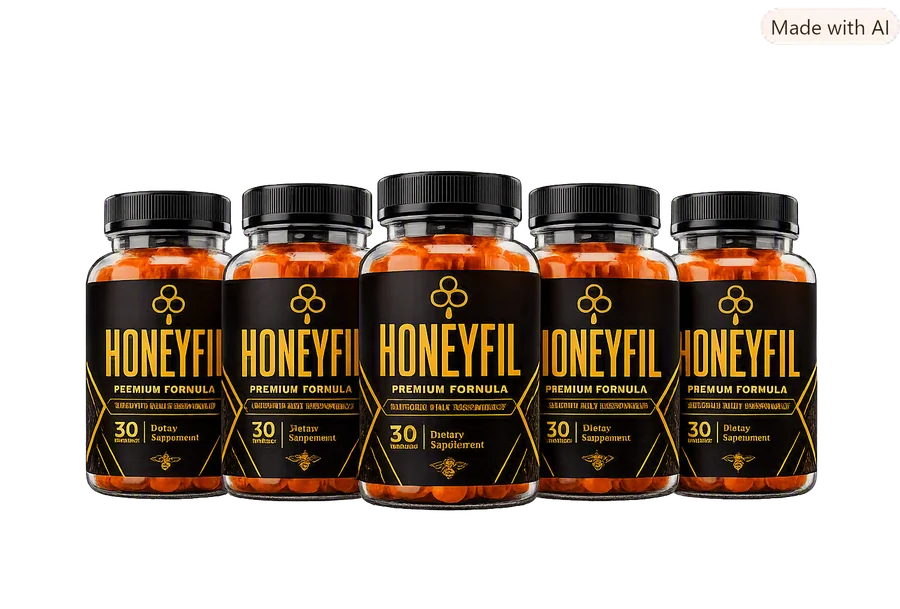
HoneyFil Ingredients
HoneyFil names eight ingredients: raw honey extract, KSM-66® ashwagandha, tribulus, zinc, black maca, Korean red ginseng, vitamin D3 and Testofen® fenugreek.
Per-gummy amounts are not published for any of the eight, which limits how directly you can compare this formula against published research doses.
What the label tells you, and what it does not
HoneyFil names all eight ingredients on its brand pages, and two of them — KSM-66® ashwagandha and Testofen® fenugreek — carry named trademarks with their own standardisation claims. That is more specific than many competing products manage.
What is missing is the number that would let you compare this gummy against the published research: milligrams per serving. Without it, you cannot know whether the KSM-66® here approaches the 300–600 mg used in ashwagandha trials, or whether it is a token amount. Neither can we.
All 8 ingredients, one by one
Raw Honey Extract — Chrysin source, unquantified
Honey and its byproducts contain chrysin, a flavonoid studied in connection with hormone metabolism. This is the ingredient behind the product's name and branding, though human evidence at typical supplement doses is thinner than for the other ingredients here.
Ashwagandha Root (KSM-66®) — Trademarked extract, unquantified
KSM-66® is a specific, standardised ashwagandha root extract with its own body of published research, generally at doses around 300–600 mg in clinical trials. Whether HoneyFil's gummy reaches that range is not disclosed.
Tribulus Terrestris — Standardised to 45% saponins, per brand
A traditional vitality botanical. The brand states a 45% saponin standardisation for the extract used, though human evidence for hormonal effects specifically is mixed across published studies.
Zinc Bisglycinate — Chelated mineral, unquantified
An essential trace mineral in a chelated form generally better absorbed than inorganic zinc salts. Zinc deficiency is linked to lower testosterone, and correcting it in deficient men is one of the better-evidenced interventions in this list.
Black Maca Root — Powdered extract, unquantified
A Peruvian root food with a long history of traditional use for energy and libido. Research specifically on black maca (versus red or yellow varieties) is more limited than for maca generally.
Korean Red Ginseng — Ginsenoside-rich extract, unquantified
A heat-processed Panax ginseng form traditionally used for vitality and stamina, and one of the more frequently studied adaptogens as a category, though results vary by extract and dose.
Vitamin D3 — Cholecalciferol, unquantified
An essential vitamin with a well-established link to healthy testosterone levels, particularly in men who are deficient. See the NIH fact sheet.
Fenugreek Seed Extract (Testofen®) — Trademarked extract, standardised to 50% fenusides, per brand
A branded fenugreek extract studied in connection with male vitality and libido, standardised to a specific compound group the brand calls fenusides.
The three worth a five-minute conversation with your doctor
Ashwagandha can interact with thyroid medication and sedatives, and is generally avoided in autoimmune conditions. Fenugreek may affect blood sugar and can interact with diabetes medication. Zinc at high intakes can interfere with copper absorption and certain antibiotics.
None of this is a reason to assume the product is unsafe for a healthy adult man — it is a reason to have a quick conversation before you start, particularly if you already take medication. Read how the formula is meant to work next.